October 24, 2025 / Callum McLennan (Variety)
The film ends with the line, “What some lived through yesterday many are living through today.” Was that written from the outset as a statement of intent to ultimately frame the story as an ever relevant refugee parable?
The film speaks directly to the present. This final line refers precisely to that connection. In 1943, many had to leave their homes to flee the Nazis. Today, thousands cross seas and deserts daily, escaping war, hunger, and horror. I consider cinema a vital tool for denunciation and reflection, allowing us to contemplate and reflect on the present through the lens of the past.
There’s a moment when a high ranking Nazi officer says, “Thinking is an extravagance in wartime.” How much does this film interrogate the ease with which ordinary people surrender moral responsibility, and how did you want to bring that into your characters and story?
This question touches the very heart of the film. From the moment I first read the screenplay for ‘Frontera,’ I engaged in a very profound reflection on who these people were and how they were divided: there were those who, despite the risk, decided to help, and those who did not, whether out of fear or indifference. Our village, on the French-Spanish border, is a microcosm that reflects the ways we react to refugees. It is a place that has just lived through the Spanish Civil War, and the scars are very visible on everyone, regardless of which side they were on. This means that every character carries their own personal dramas, their fears, and their losses. In this context, where everyone knows everyone and your neighbor knows what you think, helping a stranger becomes an act of everyday heroism. The film shows three kinds of people: those who help, those who want to denounce, and the great majority who simply look the other way, as if it were none of their business.
The Pyrenees are constant, unchanged as history around it is playing out. Did you and cinematographer Andreu Adam Rubiralta conceive the landscape as another character — a moral witness to the story — or primarily as a backdrop for tension?
From the start, cinematographer Andreu Adam Rubiralta and I conceived the Pyrenean landscape of Lleida as another character in the story. Being isolated in the mountains, with a constant sense of danger and threat – coming either from across the border or from one’s own country – shapes the characters’ personalities. They are hard, arid characters – people who know it’s them against the world because they are often overlooked and ignored by the authorities far away.
Working with all the departments was very easy. I’m very satisfied with how the whole process went, especially considering it was my first time tackling such an ambitious project on every level. I guess I’m older now and have a lot more experience behind me. But truly, both the technical and artistic teams understood from the very beginning what I wanted —to make a drama with moments of action and a much larger budget than my previous films, while keeping my own vision and personality. And they all helped me achieve that.
FRONTIER
Read Related Article
Callum McLennan (Variety)
Back to News
‘Elisa K.’ Director Judith Colell on ‘Frontier,’ a WWII Jewish Refugee Thriller, Acquired for North America by Menemsha Film
On the eve of Spain’s Valladolid Festival, the San Sebastián Special Jury Prize winner unpacks a new refugee story, of those who help, those who denounce and the many who look away.
When Filmax introduced Judith Colell’s “Frontier” (“Frontera”) to buyers at Cannes, the WWII thriller drew attention and was ultimately picked up for North American release via Menemsha Films.
When Filmax introduced Judith Colell’s “Frontier” (“Frontera”) to buyers at Cannes, the WWII thriller drew attention and was ultimately picked up for North American release via Menemsha Films.
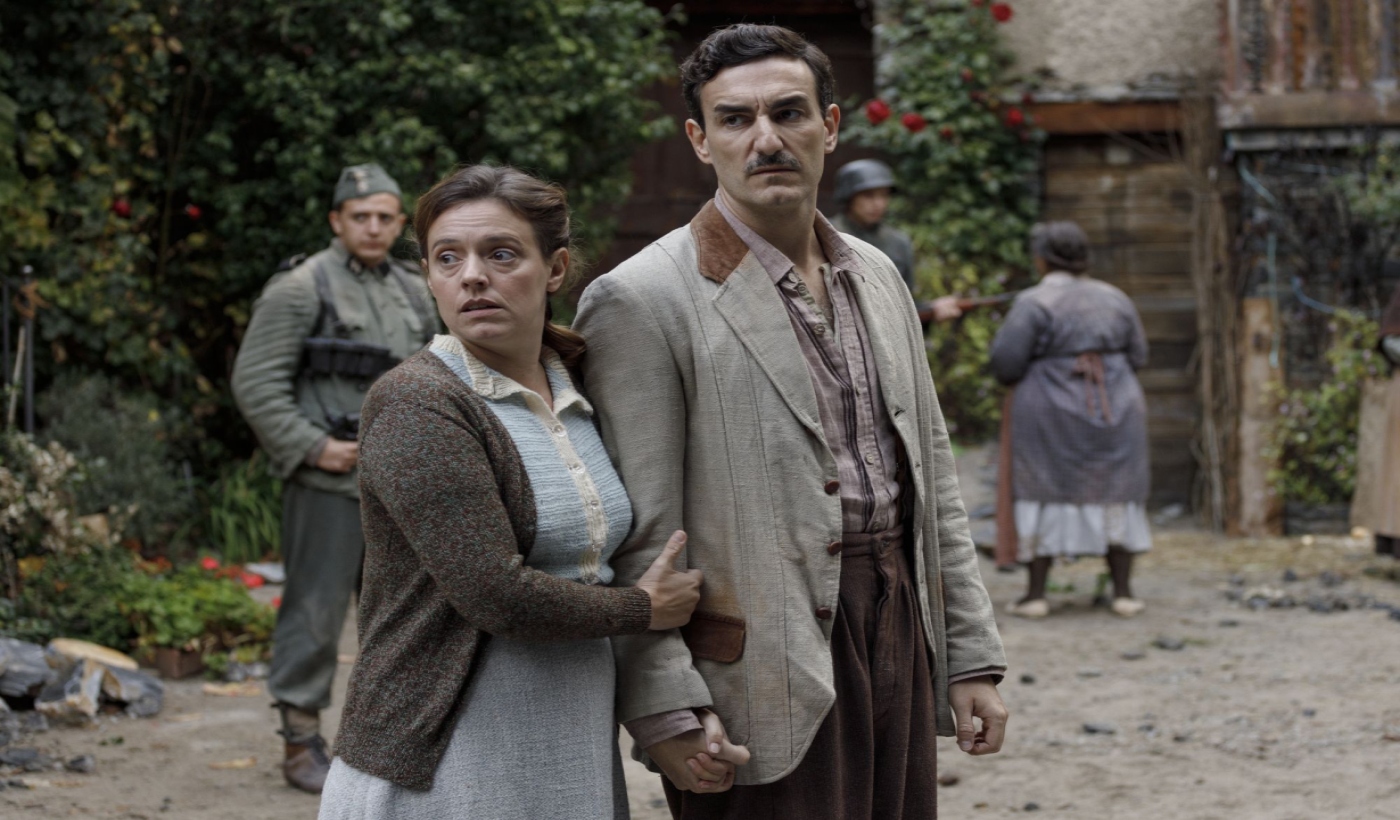
It follows Manel Grau, a Spanish customs officer in 1943 who defies Franco’s orders and risks his life to help Jews cross from Nazi-occupied France into Spain, a decision that reawakens the wounds of the still recent Civil War.
A Spanish-Belgian co-production between Coming Soon Films, Diagonal TV, Crespeth Films and Bulletproof Cupid, “Frontier” will be release by Filmax in Spanish theaters on Dec. 12, following its world premiere at the Valladolid Festival, which kicks off Oct. 24.
Colell, president of the Catalan Film Academy and known for “Elisa K” and “15 Hours,” brings intimacy and social focus to a larger canvas. “‘Frontier’ is, at its heart, an act of reflection,” she says. “It’s about the courage to help when most look away.”
A Spanish-Belgian co-production between Coming Soon Films, Diagonal TV, Crespeth Films and Bulletproof Cupid, “Frontier” will be release by Filmax in Spanish theaters on Dec. 12, following its world premiere at the Valladolid Festival, which kicks off Oct. 24.
Colell, president of the Catalan Film Academy and known for “Elisa K” and “15 Hours,” brings intimacy and social focus to a larger canvas. “‘Frontier’ is, at its heart, an act of reflection,” she says. “It’s about the courage to help when most look away.”
Shot by Andreu Adam Rubiralta (“The Gypsy Bride”) with Alexa 35 cameras and vintage lenses, the film contrasts the Pyrenees’ timelessness with the harsh history unfolding rapidly in their midst.
The ensemble cast features Bruna Cusí (“Upon Entry”), Miki Esparbé (“More the Merrier”), Asier Etxeandia (“Pain and Glory”), Maria Rodríguez Soto (“A House on Fire”), Belgian actor Kevin Janssens (“Revenge,” “Close”), and Jordi Sánchez (“La que se avecina”).
The ensemble cast features Bruna Cusí (“Upon Entry”), Miki Esparbé (“More the Merrier”), Asier Etxeandia (“Pain and Glory”), Maria Rodríguez Soto (“A House on Fire”), Belgian actor Kevin Janssens (“Revenge,” “Close”), and Jordi Sánchez (“La que se avecina”).
Colell and her producers describe the film as an intense, deeply human historical thriller, a story about “those who help, those who want to denounce, and the great majority who simply look the other way.” Beneath its wartime intrigue lies a parable about empathy and moral agency, themes that, Colell told Variety, “speak directly to the present.”
Below, the filmmaker discusses how she conceived the Pyrenees as a living character, balancing drama and tension, and finding resonance between past and present.
Below, the filmmaker discusses how she conceived the Pyrenees as a living character, balancing drama and tension, and finding resonance between past and present.
The film ends with the line, “What some lived through yesterday many are living through today.” Was that written from the outset as a statement of intent to ultimately frame the story as an ever relevant refugee parable?
The film speaks directly to the present. This final line refers precisely to that connection. In 1943, many had to leave their homes to flee the Nazis. Today, thousands cross seas and deserts daily, escaping war, hunger, and horror. I consider cinema a vital tool for denunciation and reflection, allowing us to contemplate and reflect on the present through the lens of the past.
There’s a moment when a high ranking Nazi officer says, “Thinking is an extravagance in wartime.” How much does this film interrogate the ease with which ordinary people surrender moral responsibility, and how did you want to bring that into your characters and story?
This question touches the very heart of the film. From the moment I first read the screenplay for ‘Frontera,’ I engaged in a very profound reflection on who these people were and how they were divided: there were those who, despite the risk, decided to help, and those who did not, whether out of fear or indifference. Our village, on the French-Spanish border, is a microcosm that reflects the ways we react to refugees. It is a place that has just lived through the Spanish Civil War, and the scars are very visible on everyone, regardless of which side they were on. This means that every character carries their own personal dramas, their fears, and their losses. In this context, where everyone knows everyone and your neighbor knows what you think, helping a stranger becomes an act of everyday heroism. The film shows three kinds of people: those who help, those who want to denounce, and the great majority who simply look the other way, as if it were none of their business.
Our goal is to dedicate the film to the first group, to those who commit themselves. I firmly believe that, in the world we live in today, we must show that every small gesture matters. Our stories must help us overcome an individualistic and insensitive society, and demonstrate that, together, we can build a more humane and supportive world.
Each character has quite distinct moral challenges they are navigating, how was the casting process, finding the right actor to inhabit each part?
The casting process was long and complex because there are many characters. But basically, the main actors were the ones I had in mind from the beginning of the project. Working with them was exhaustive; we rehearsed and talked a lot about the characters, their motivations, and intentions. I think it’s important not only to have great actors —which they all are — but also committed ones who question everything. And that’s something they all share. We worked to show each character’s context and to give them depth. We didn’t want flat characters we didn’t want simple good guys and bad guys. It’s about understanding where they all come from and what drives them to be who they are and act as they do.
Each character has quite distinct moral challenges they are navigating, how was the casting process, finding the right actor to inhabit each part?
The casting process was long and complex because there are many characters. But basically, the main actors were the ones I had in mind from the beginning of the project. Working with them was exhaustive; we rehearsed and talked a lot about the characters, their motivations, and intentions. I think it’s important not only to have great actors —which they all are — but also committed ones who question everything. And that’s something they all share. We worked to show each character’s context and to give them depth. We didn’t want flat characters we didn’t want simple good guys and bad guys. It’s about understanding where they all come from and what drives them to be who they are and act as they do.
The Pyrenees are constant, unchanged as history around it is playing out. Did you and cinematographer Andreu Adam Rubiralta conceive the landscape as another character — a moral witness to the story — or primarily as a backdrop for tension?
From the start, cinematographer Andreu Adam Rubiralta and I conceived the Pyrenean landscape of Lleida as another character in the story. Being isolated in the mountains, with a constant sense of danger and threat – coming either from across the border or from one’s own country – shapes the characters’ personalities. They are hard, arid characters – people who know it’s them against the world because they are often overlooked and ignored by the authorities far away.
In these sparsely populated spaces, the mountain always defeats the human, instilling a deep respect for the environment. Consequently, all those who arrived after the war are viewed with suspicion and deep mistrust. They simply wouldn’t be the same if they weren’t in the Pyrenees.
That isolation is what makes them who they are. In this case, I’m especially referring to the characters from the village, such as Juliana or the mayor, whose actions and perspectives are inseparable from their rugged environment.
Visually, the film plays as a thriller but with the restraint of a drama given the many intimate moments. What choices in pacing, framing, or cutting helped you balance those two impulses?
I’m used to intimate films, my references are intimate films, usually dramas or social cinema. The thriller element was new to me — but it was there. I suppose my background in more intimate cinema influenced the mise-en-scène a bit. For me, the work on the characters’ faces is essential to reveal their souls – what they feel and how they evolve. I had to find a balance between this personal language and a story that included elements of thriller and action. It was truly a challenge. In this sense, working with the film’s editor, Liana Artigal, was crucial. From the very beginning, she understood the challenge and helped me find that balance.
I’m used to intimate films, my references are intimate films, usually dramas or social cinema. The thriller element was new to me — but it was there. I suppose my background in more intimate cinema influenced the mise-en-scène a bit. For me, the work on the characters’ faces is essential to reveal their souls – what they feel and how they evolve. I had to find a balance between this personal language and a story that included elements of thriller and action. It was truly a challenge. In this sense, working with the film’s editor, Liana Artigal, was crucial. From the very beginning, she understood the challenge and helped me find that balance.
Beyond the historical narrative, what does the “border” mean for you, politically, emotionally, or even within Spain’s current debate over memory and migration?
For me, the concept of the “border” today represents the hardship faced by thousands of people every day who wish to cross it in search of a better life. And it represents our collective responsibility to help. Because we must understand that those who cross a border fleeing their homes do not do so for trivial reasons. No one crosses the sea unless the water is safer than the land, as the Anglo-Somali poet Warsan Shire wrote. Politically and emotionally, the border functions as a mirror that sharply reflects our shared humanity and, crucially, the choices we make when faced with the desperation of others.
Diagonal is well known for its long-running period dramas, large-scale, finely-tooled productions. Was their background particularly helpful to this production?
Diagonal background in long-running period dramas and large-scale productions was, without a doubt, an invaluable technical and logistical foundation for Frontera. This kind of film demands great rigor in production design and historical recreation, and they are specialists in that field. However, I want to emphasize that the true strength of the project came from the synergy of the co-production. [Coming Soon producer] Marta Ramírez vision was equally crucial. While Diagonal provided the large-scale structure, Marta championed the project from its inception, bringing a deep sensitivity to the narrative, supporting the tone, script development and artistic vision. The combination of two producers with such complementary perspectives and experiences was the project’s greatest asset.
You assembled heads of department on top form, how was it to collaborate on a larger scale project given the smaller scale of your previous work?
You assembled heads of department on top form, how was it to collaborate on a larger scale project given the smaller scale of your previous work?
Working with all the departments was very easy. I’m very satisfied with how the whole process went, especially considering it was my first time tackling such an ambitious project on every level. I guess I’m older now and have a lot more experience behind me. But truly, both the technical and artistic teams understood from the very beginning what I wanted —to make a drama with moments of action and a much larger budget than my previous films, while keeping my own vision and personality. And they all helped me achieve that.
FRONTIER
Read Related Article
Callum McLennan (Variety)
Back to News
We use our own and third-party cookies to analyze user browsing and ensure the correct functioning of the website. You can accept or reject all cookies by clicking the "Accept all" or "Reject all" button respectively, as well as configure them according to your preferences by clicking the "Cookie settings" button. For more information, you can visit our Cookie Policy.
Cookies settings panel
This is the advanced settings panel for first-party and third-party cookies. Here you can modify parameters that will directly affect your browsing experience on this website.
| Type of Cookie | Status |
|---|---|
| Essential cookies for the functioning of the website |
|
| Google Analytics Cookies |
|